Design Thinking...Connecting the Dots via "Wicked Problem Solving"
Updated: May 25

A Good Brainstorming Technique
Learning to think with design thinking principles in mind is a good skill to have. As a matter of fact, gone are the days of dry, dull thick books that one had to read (in large quantities) to get through college, or any program. Now, we welcome a much more visual approach that lends itself to quicker understanding, even when wading through the murky murk of project complexity.
PMI's "Wicked Problem Solving" program offers just that – a chance to think in visual terms, teaching us to brainstorm based on the uniqueness of the situation. And if you're anyone like me, you have found yourself looking for a way to compartmentalize – and make sense of – situations that do not fall neatly under "simple". For example, within the operations team, we kept hitting a roadblock when our content program outgrew our magnificently organized...spreadsheet.
Tracking cable
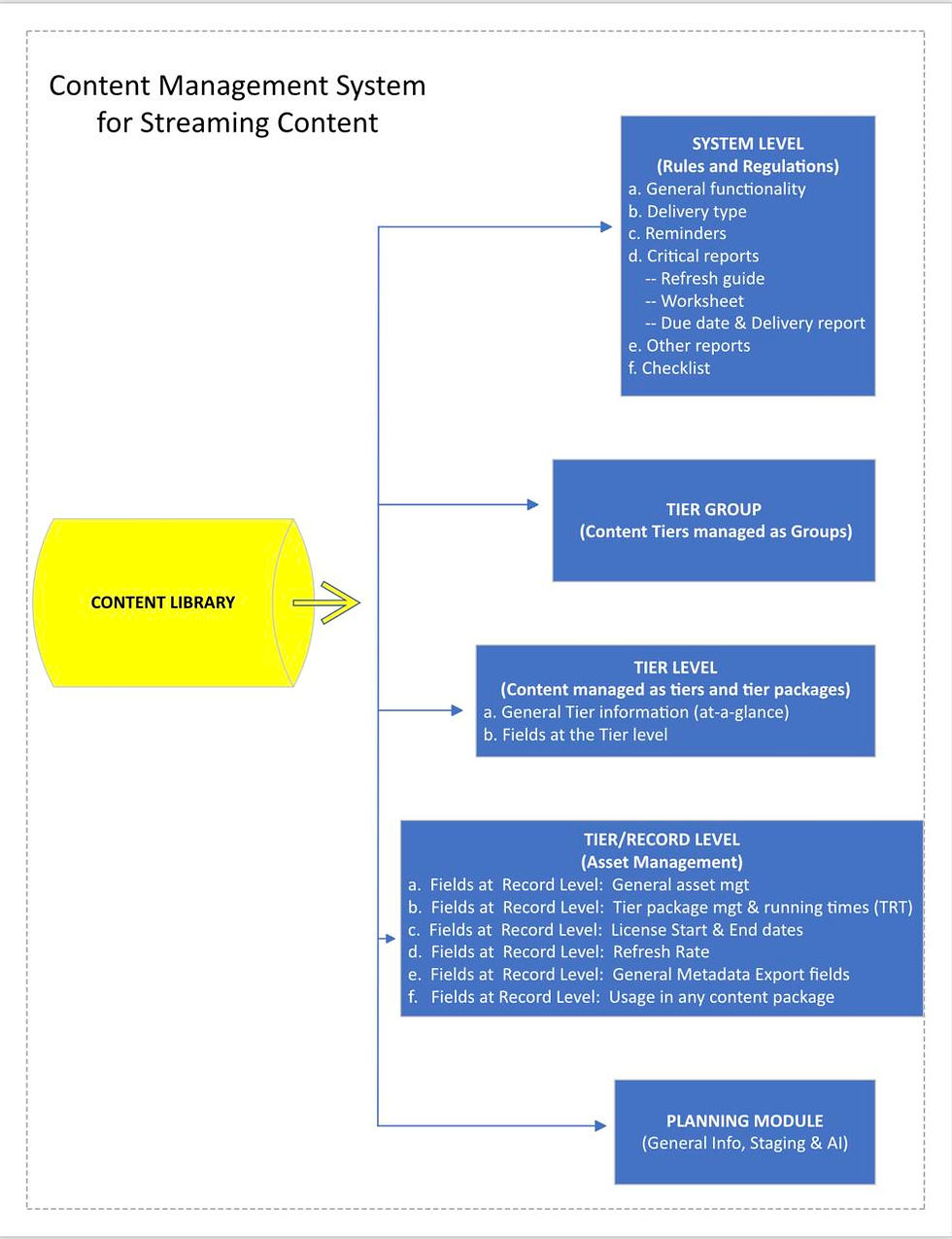
content offerings by System Level, Tier Group, Tier Label, Title and Planning became untenable. The spreadsheet could not tell us whether the title had been used previously, if we could use it again, or what version of the title we could use. But most of all, the spreadsheet ran into trouble when it came to planning content over time, and of course, the spreadsheet failed when it came to discussions of scaling the program. Without a proper dashboard, database, or content overview – today known as a Content Management System – we flailed about like flags in the wind.
While defining requirements and breaking down the system components of our new application was not easy, at least with design thinking principles at hand, we found a way through the complexity. You see, the program teaches numerous "plays" that can be used to brainstorm and put context around ideas, approaches, methods, and habits (or current-state thinking). By identifying things like Frames (people, objects, transactions, processes, etc), Pressures (urgency, impact, control, time, etc), and Structures (decisions, crossroads, dilemmas), finding the right plays is not hard.
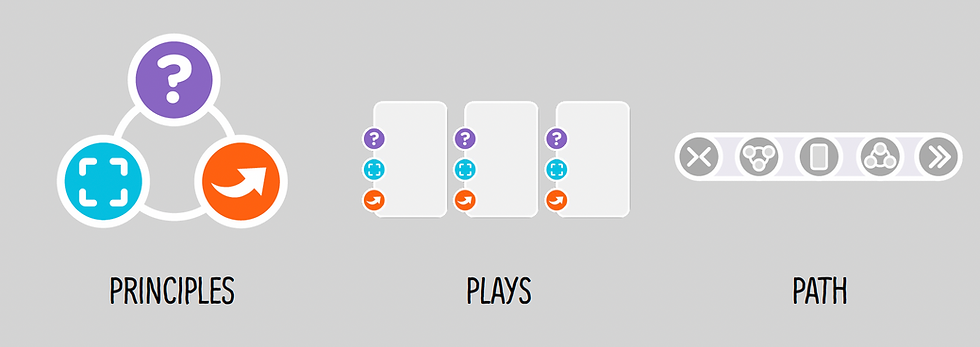
Since Wicked Problem Solving offers solutions for any industry, any challenge, any complexity, and any real-world process improvement, choosing which "plays" to incorporate is what guides the team – and their thinking – from problem >>>to>>> solution. Why did I write "problem to solution" like that? Because problems (and inconveniences) tend to go on for a while, seriously badgering hardworking, organized folks, until someone finally takes a stand. Which brings me to the "plays" that guided my team to a real-world design for our content management app.
Suffice to say, the "plays" a team chooses based on the frames, pressures and structures of a particular business issue are simple, yet important, in making the leap from tedious to competitive. That said, and in the spirit of barreling forth as quickly as possible (and always with blind optimism in mind), we used several different design thinking strategies.
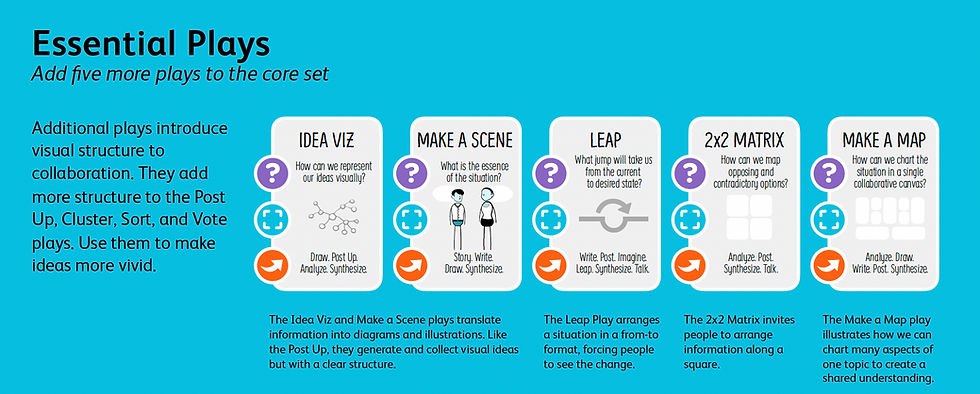
For initial brainstorming and our "essential play", we used a strategy that can be defined as: Idea Viz — Make a Scene — Leap — 2x2 Matrix — Make a Map, as shown below.
For working out the design itself: Define — Map — Flow — Pull — Optimize.
For development: Stories — Features — Scrum — Backlog.
And for good measure, we sprinkled in other idea tools, namely "user scenarios", which helped us define approaches for different types of users.
Was the first version of the content app a resounding success? Well, maybe yes, maybe no, depends on whom you ask. However, by version 2 updates, we were sitting pretty and conquering the content management world. It could be said that the company that later purchased us liked the app enough to incorporate it.
Go team!


Comments